


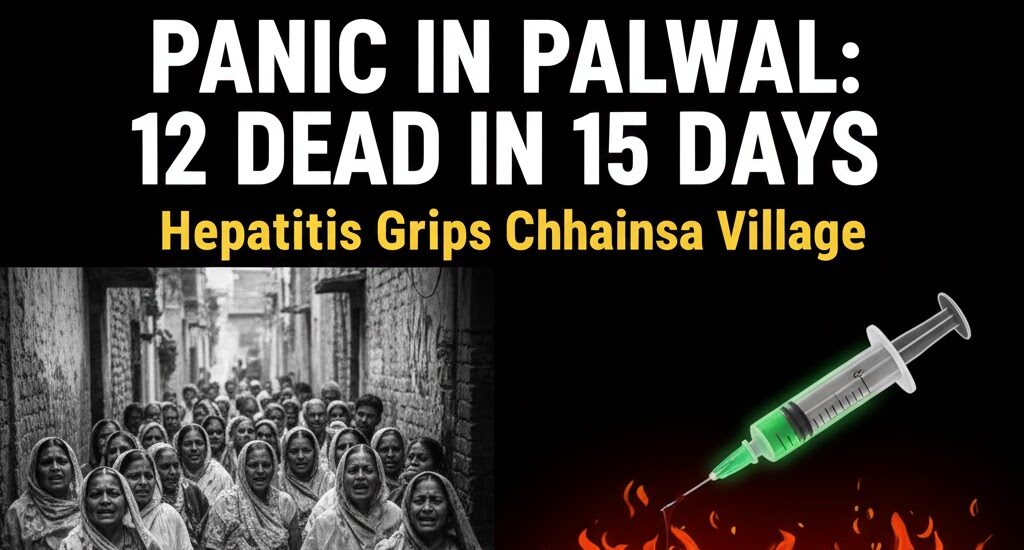
The Chhainsa village in Haryana‘s Palwal district is currently in the grip of a severe health crisis and deep mourning, where the mysterious and sudden deaths of 12 people within just 15 days have sent shockwaves through the state’s administrative machinery. The gravity of the situation can be gauged by the fact that health department teams have been stationed in the village for the past two weeks, yet this cycle of death shows no signs of stopping. Under the supervision of Nodal Officer Basudev and PHC Camp Incharge Devendra Jakhar, nearly 600 villagers have been screened so far, with results that have shocked everyone.
Investigations have confirmed that 29 villagers are infected with Hepatitis C and 3 with Hepatitis B. While doctors consider infected blood and unsafe needles to be the primary causes of these diseases, such a high number of infections in a single village points toward a deeper, hidden crisis. Contrary to official claims, the residents of Chhainsa directly blame the contaminated drinking water and the widespread filth surrounding the village for these deaths and illnesses. Sharing his grief, village resident Hakimuddin noted that on February 11, Dilshad, a 24-year-old youth from his family, died within just 48 hours.
Dilshad was taken to the hospital after initially suffering from a mild fever, but he could not be saved. Villagers allege that due to a severe shortage of drinking water, they must rely on tankers; this water is stored in underground tanks for months, eventually becoming toxic. Furthermore, the water in the canal passing near the village has turned black and completely contaminated; its use in farming means this poison is now leaching into food and groundwater. The stagnant dirty water surrounding the village has become a massive breeding ground for mosquitoes and infection.
This environment has caused families of many villagers like Arif to fall victim to Hepatitis. While the health department is currently conducting vaccination and awareness drives, residents believe that as long as there is no permanent solution for clean drinking water and proper drainage, the shadow of death will continue to loom over the people of Chhainsa. The situation remains critical as the community waits for a more comprehensive intervention to address the root causes of this outbreak.
